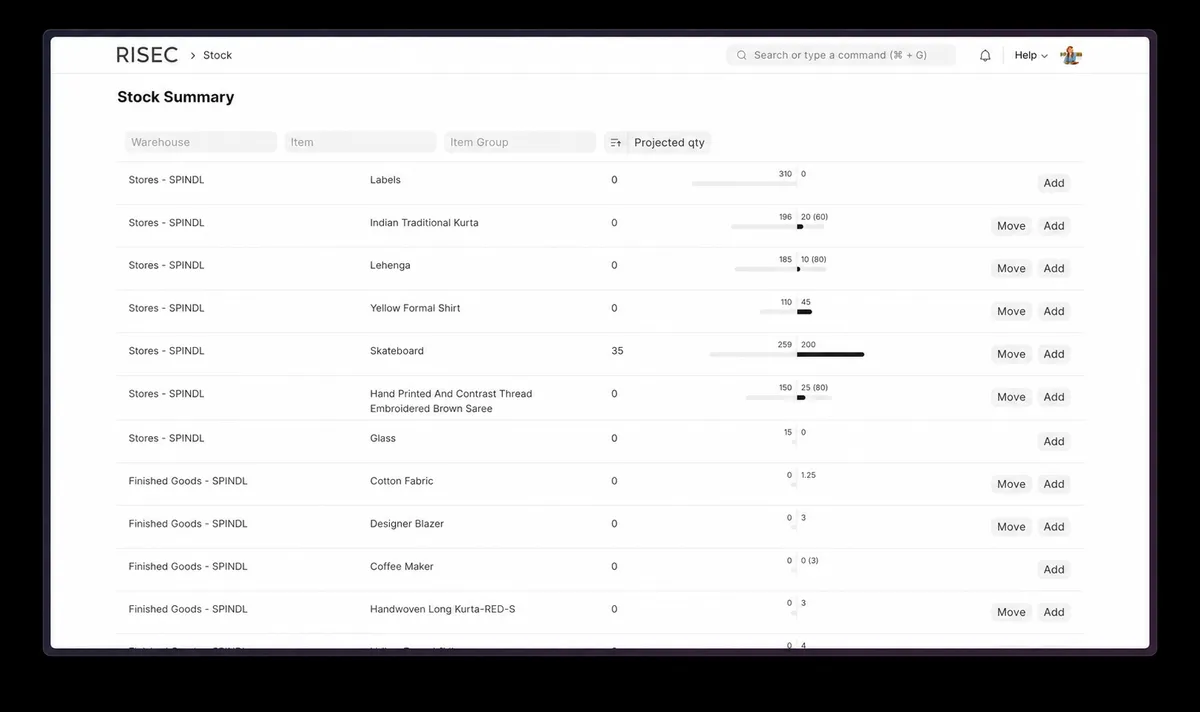
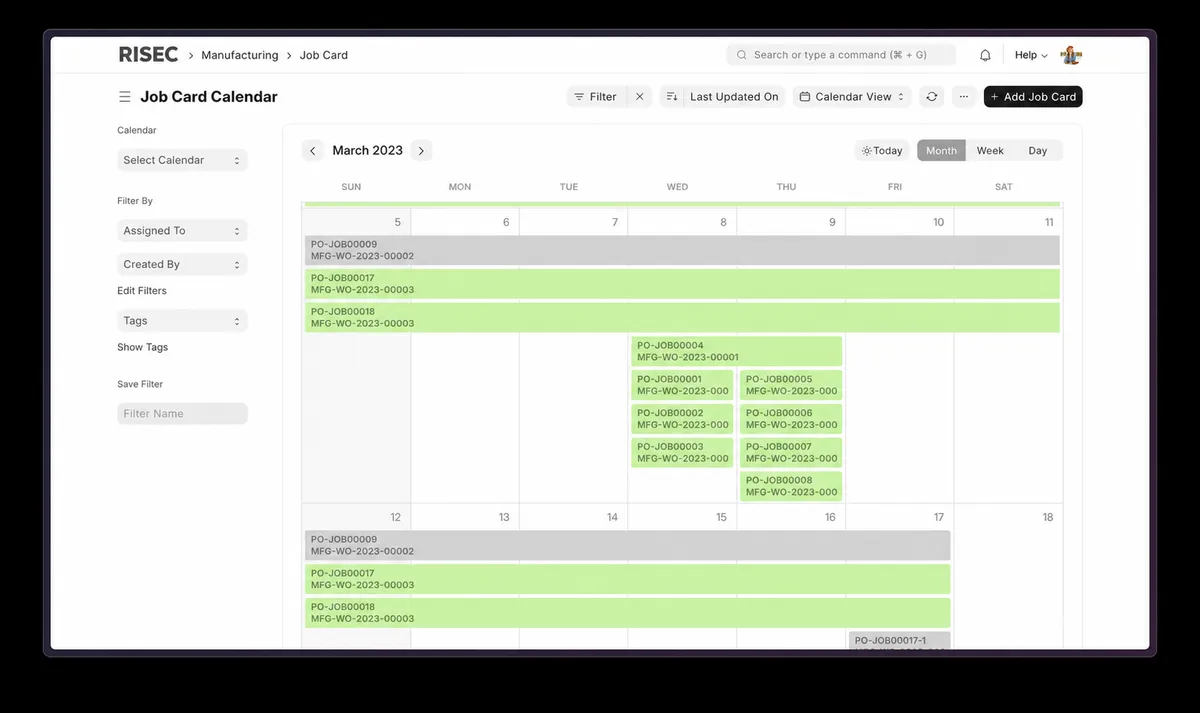
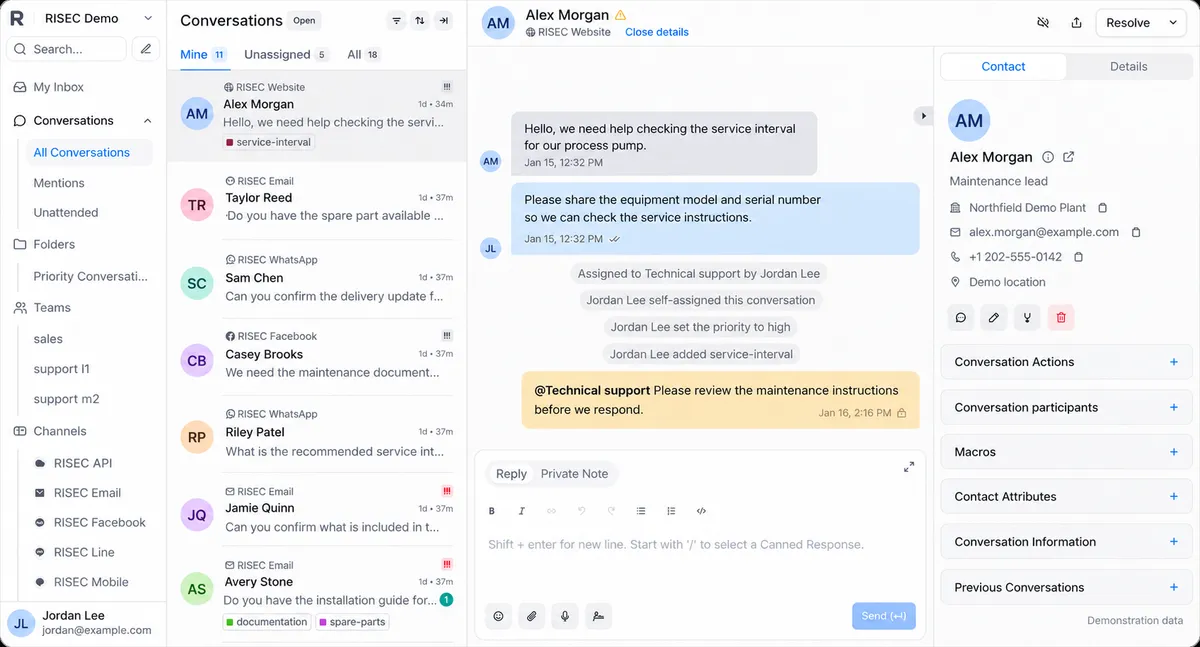
Reduce excess stock, prevent shortages, and improve inventory controlKnow what's happening on the shop floor, job by job.Reduce laboratory turnaround times with faster testing, approvals, and reporting.Turn complex RFQs into accurate, margin-checked quotations faster.Turn your installed equipment base into recurring service and parts revenue.Run purchasing, production, inventory, and accounting in one system.Resolve more customer conversations with one unified support inbox.
Connect part availability, BOM requirements, stock movements, supplier orders, and production demand to make purchasing and build decisions using accurate inventory records.Monitor work orders, production stages, workstation activity, material usage, and inspection results through connected execution records accessible to production supervisors.Connect sample identification, testing procedures, analyst results, quality controls, approvals, and certificates of analysis to reduce manual administration and reporting errors.Automate RFQ intake and line-item preparation, organize supplier offers, evaluate delivered costs and profitability, and produce review-ready quotations through one workflow.Track customer equipment, maintenance schedules, service history, replacement parts, and renewal opportunities. Automatically organize follow-ups to capture aftermarket business before it is missed.Connect sales orders, material planning, procurement, manufacturing work orders, inventory movements, invoicing, and financial accounting without duplicating records across disconnected tools.Bring website chat, email, and supported messaging channels into one workspace with conversation history, team assignments, internal collaboration, and automated routing.
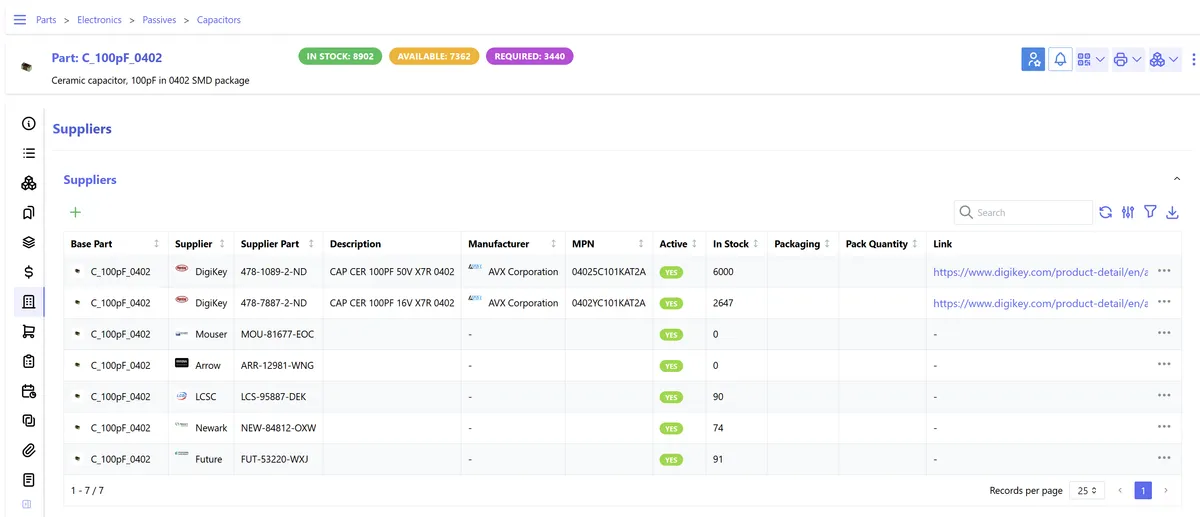
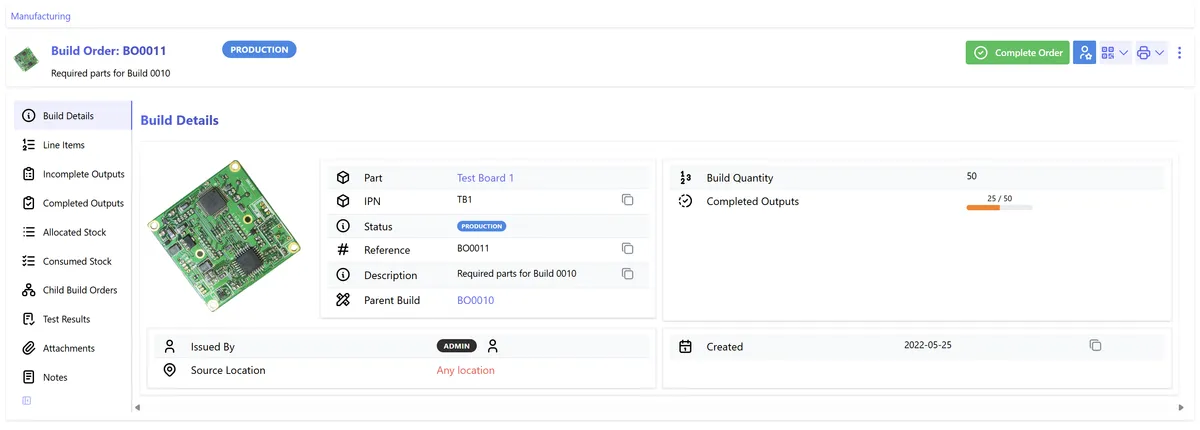
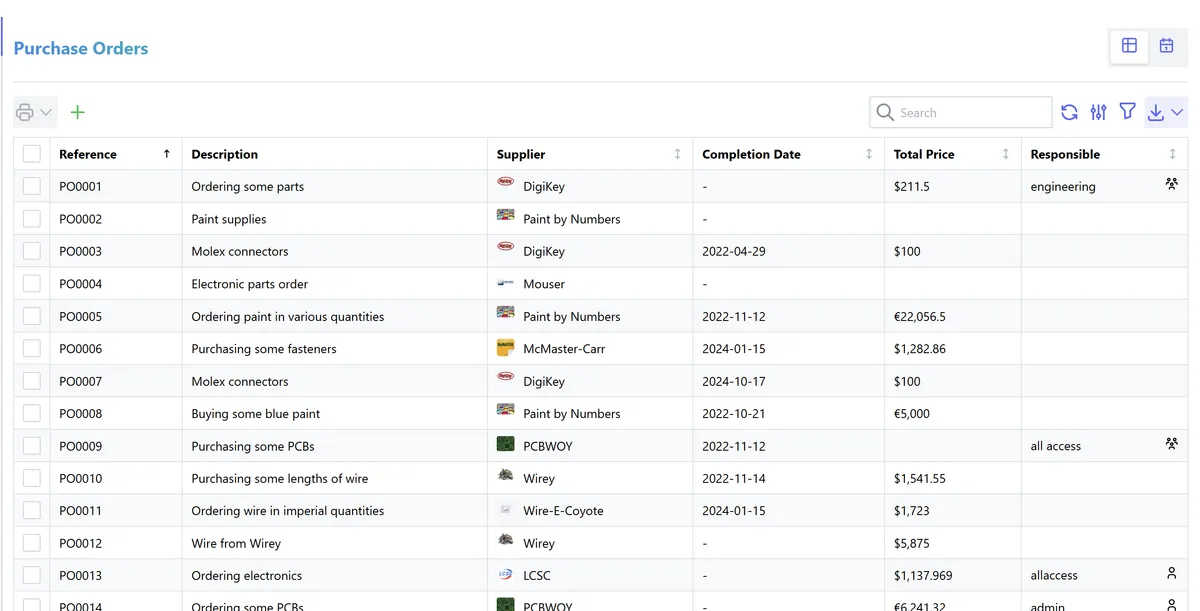
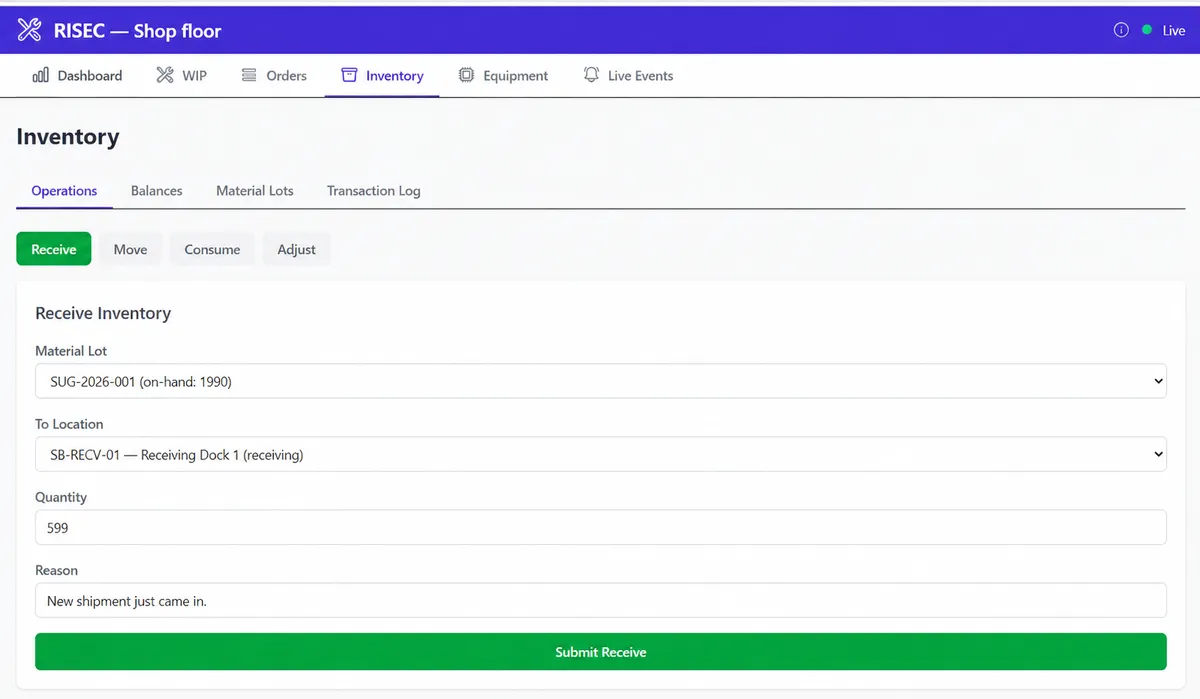
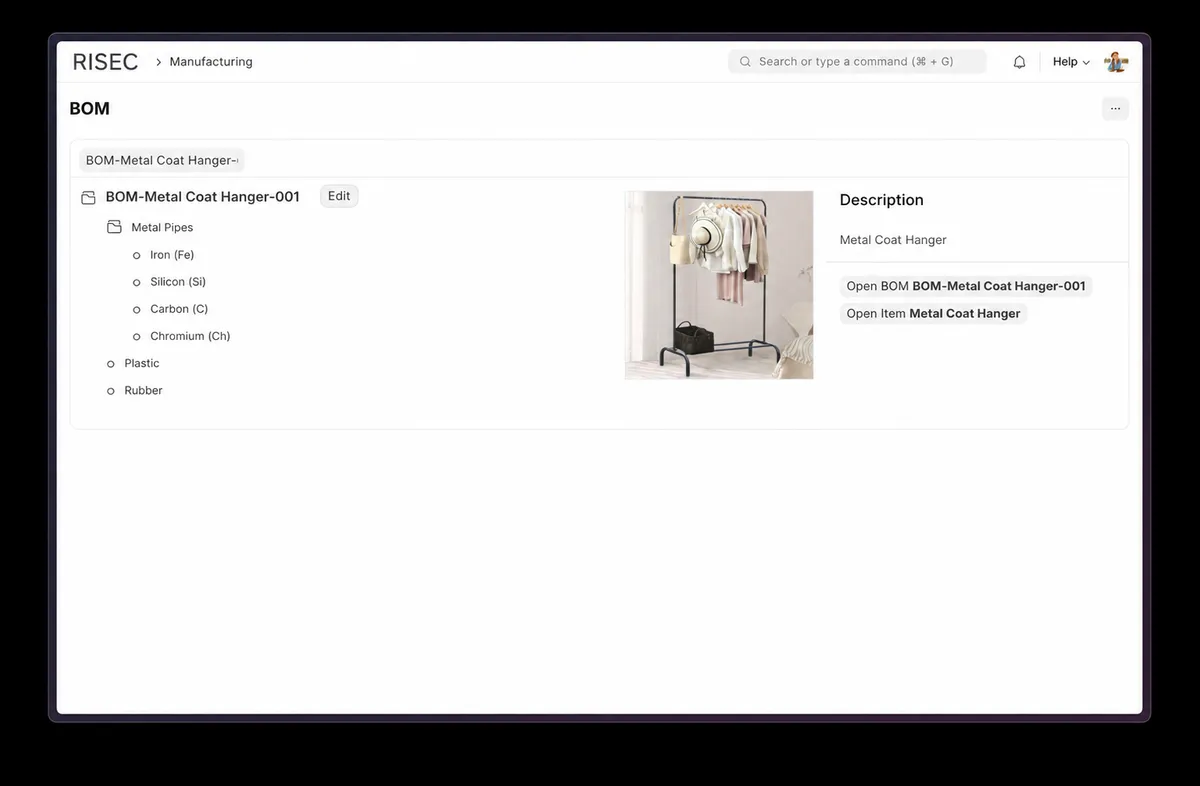
Track available, allocated and incoming stock against bills of materials and production requirements. Manage purchasing, supplier records and build progress to prevent component shortages and production delays.
One part record from supplier to finished assembly.
Part & supplierBOM & allocationBuild & stock history
Stop losing critical parts, purchasing and inventory information across spreadsheets.
When parts are tracked in spreadsheets, experienced staff become the inventory system. Someone knows that a component has moved, that a purchase order is arriving, or that a build is short three parts. But those facts aren't always available to the next person who needs them.
Follow the part through receipt, allocation and the completed build
Inventory Management gives your team one place to manage part records, stock locations, supplier information, BOMs and production builds. Follow a part from receipt through allocation and into a completed assembly. Check shortages before promising production dates. Maintain a consistent history when staff and responsibilities change.
Prevent production shortages with reliable inventory and BOMs.
See the parts, purchasing and ERP scope
See parts, stock locations, purchase orders, bills of materials and work in progress without chasing files across the company. Start with Inventory Management or explore Manufacturing ERP for a broader operational and financial system.
Manage part specifications, supplier references, revisions and documentation in one place.
Organized part catalogues:
Arrange components into nested categories so engineers and stores can locate the same item quickly.
Part templates and configurable attributes:
Define meaningful fields for part families, including units, dimensions and specifications, so similar-looking parts do not become interchangeable by accident.
Internal, manufacturer and supplier references:
Keep the company's part number connected to the specific manufacturer and supplier item codes used when purchasing.
Manufacturer and supplier records:
Compare approved sources without losing the underlying part identity used in a drawing or bill of materials.
Part variants, assemblies and consumables:
Distinguish purchasable components, manufactured assemblies and consumable materials so transactions follow the right workflow.
Part revisions and supporting documentation:
Retain the revision and technical context needed to investigate substitutions or changed requirements. Supported part images, attachments and documentation make identification easier at the shelf.
Minimum and maximum stocking information:
Highlight recorded replenishment thresholds as planning inputs, not as a guarantee that all shortages can be forecast automatically.
Units of measure:
Record parts and supplier pack units appropriately so a box, metre or individual component does not silently become the wrong quantity.
Track stock availability, allocations, movements and traceability across warehouses.
Multiple warehouses and nested locations:
Place stock in the real bins, rooms and stores your team uses, including appropriate external locations when configured.
Available stock and allocations:
Separate recorded on-hand quantity from material already allocated to builds or orders.
Stock statuses and controlled adjustments:
Investigate rejected, unavailable or otherwise restricted stock instead of treating every item as immediately usable.
Lot, batch and serial identities:
Follow individually identified items where the process requires traceability; retain the actual movement history rather than reconstructing links later.
Stock receipts, transfers and tracking:
See when material arrived, who moved it and where it was recorded at each stage.
Stock counts and reconciliation:
Record physical-count corrections with the supporting adjustment trail, including periodic stocktaking where configured.
Expiry and date-sensitive stock:
Identify recorded expiration dates and avoid picking material beyond permitted use where the applicable rules are set up.
Inspection and item test records:
Record available stock-item test results against the specific unit when receiving or commissioning evidence matters.
Ownership and external stock context:
Distinguish relevant ownership and external locations rather than assuming every item physically present belongs to available internal stock.
RISEC Manufacturing Execution & Laboratory Management Systems
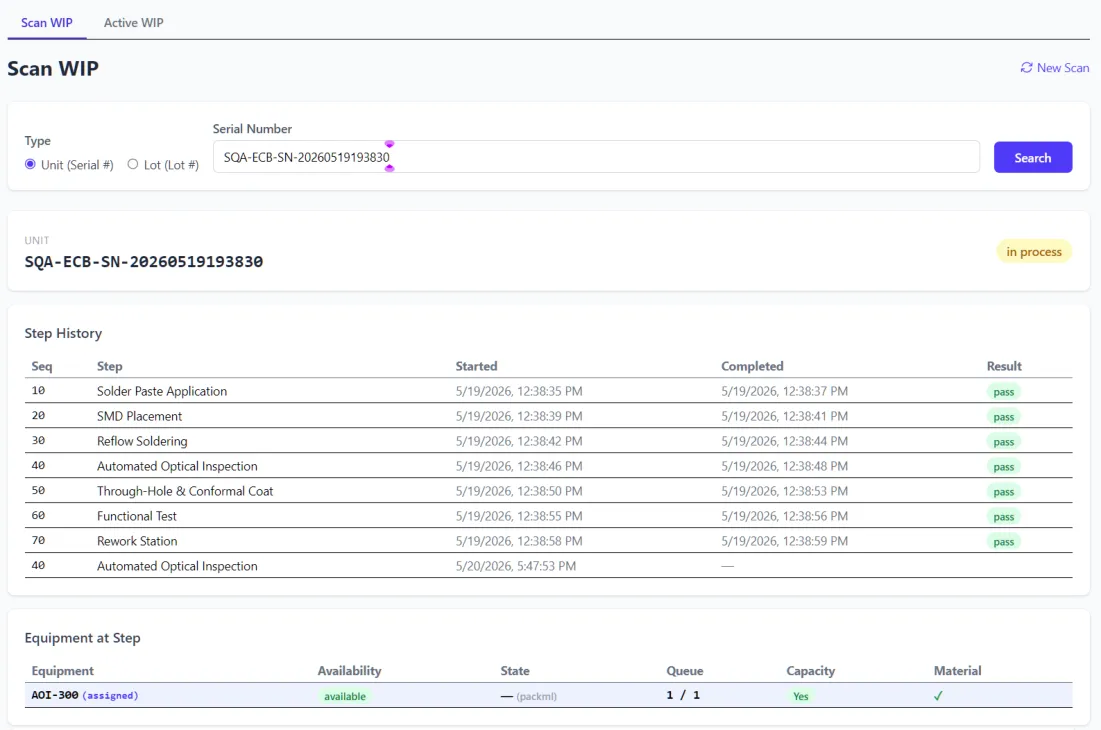
Track manufacturing work orders, station activity, material consumption and quality records. Manage laboratory samples, testing, technical reviews and certificates through traceable workflows.
Manufacturing execution
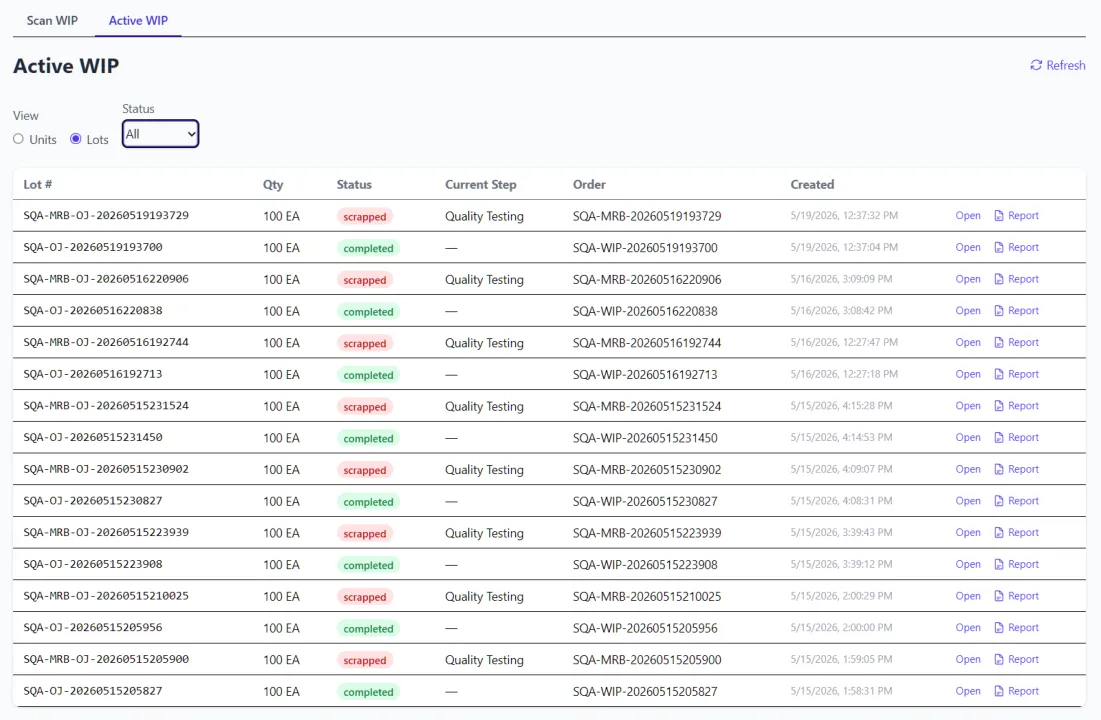
Track work orders, operation progress, material usage and quality holds.
Work in progressProduction eventsQuality records
Follow jobs, station activity and material records through the shop floor.
Engineering enquiry. Production security and site interfaces require verification.
Dispatch & worklists
Release the next lot, unit or operation to the shop floor.
WIP & genealogy
Follow production status and the recorded links between material and output.
Station execution
Record operation starts, processing, completions and transaction quantities.
Quality & holds
Capture results, exceptions and the authorized action needed to continue.
Production dashboards
Review WIP, materials and equipment context in one operational view.
APIs & equipment interfaces
Scope and test production APIs, machine signals and integration plugins.
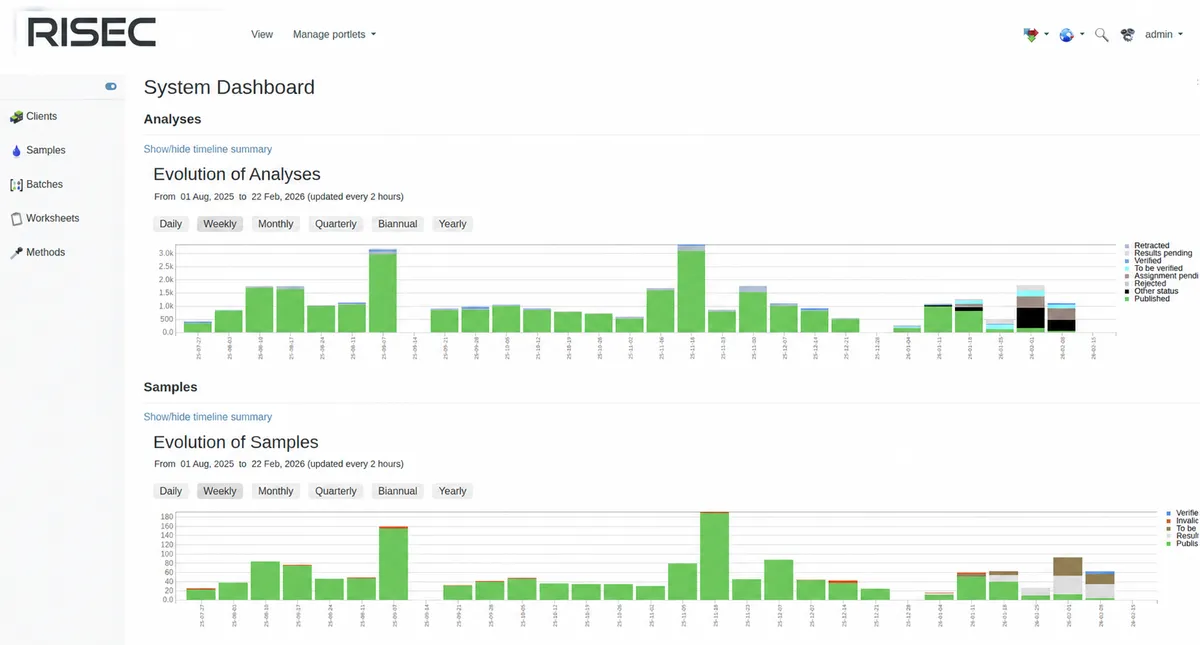
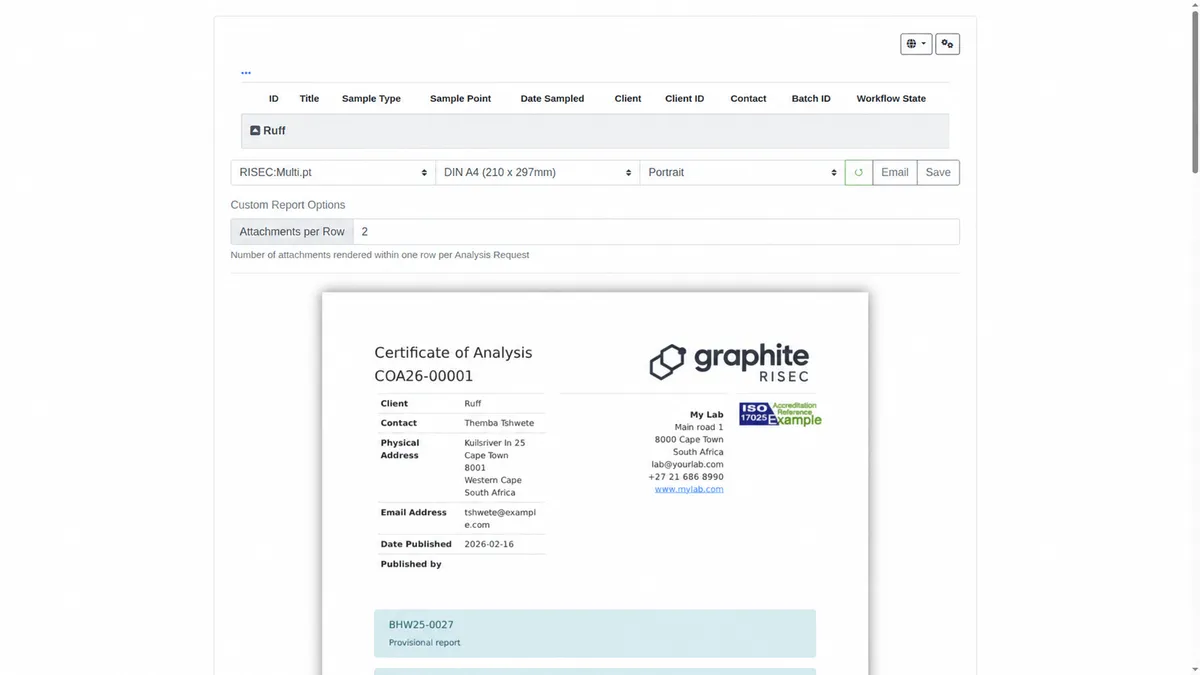
Reduce laboratory turnaround times with faster testing, approvals, and reporting.
Sample receiptTechnical reviewReport release
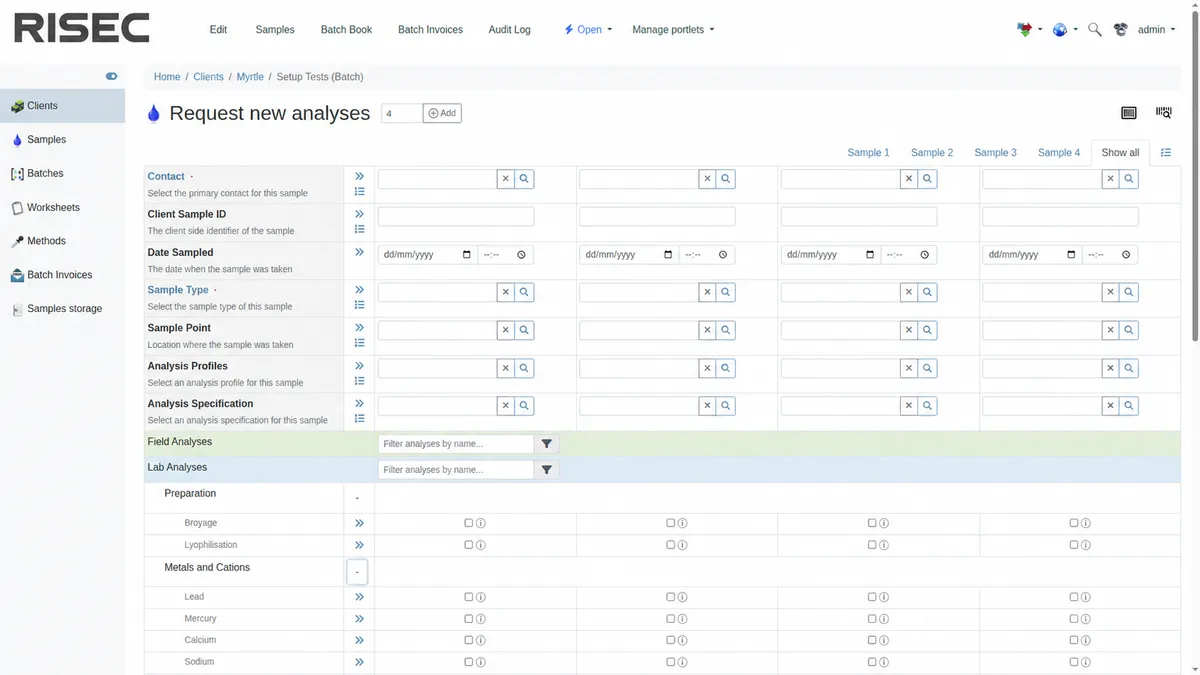
Manage sample receipt, test assignments, analytical results, quality checks, technical approvals and Certificates of Analysis from a traceable sample record.
ReceivedTestedAuthorized
Sample registration
Connect the sample, customer, collection point, container and storage record.
Tests & worksheets
Assign analytical services and organize the work technicians need to complete.
Result entry
Record results, calculations and supported instrument inputs against the sample.
QC & technical review
Keep reference materials, checks and approval stages attached to the work.
Certificates & reporting
Release authorized Certificates of Analysis and configured customer report layouts.
History & permissions
Trace sample changes and restrict sensitive actions to the right roles.
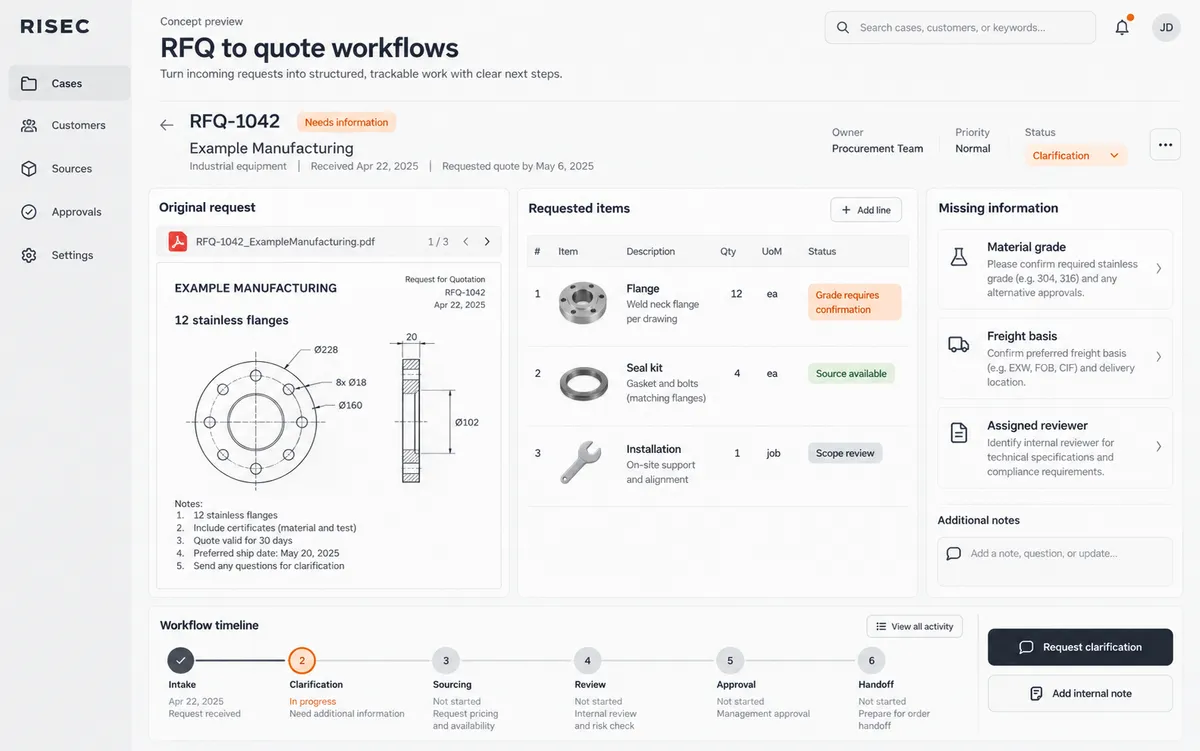
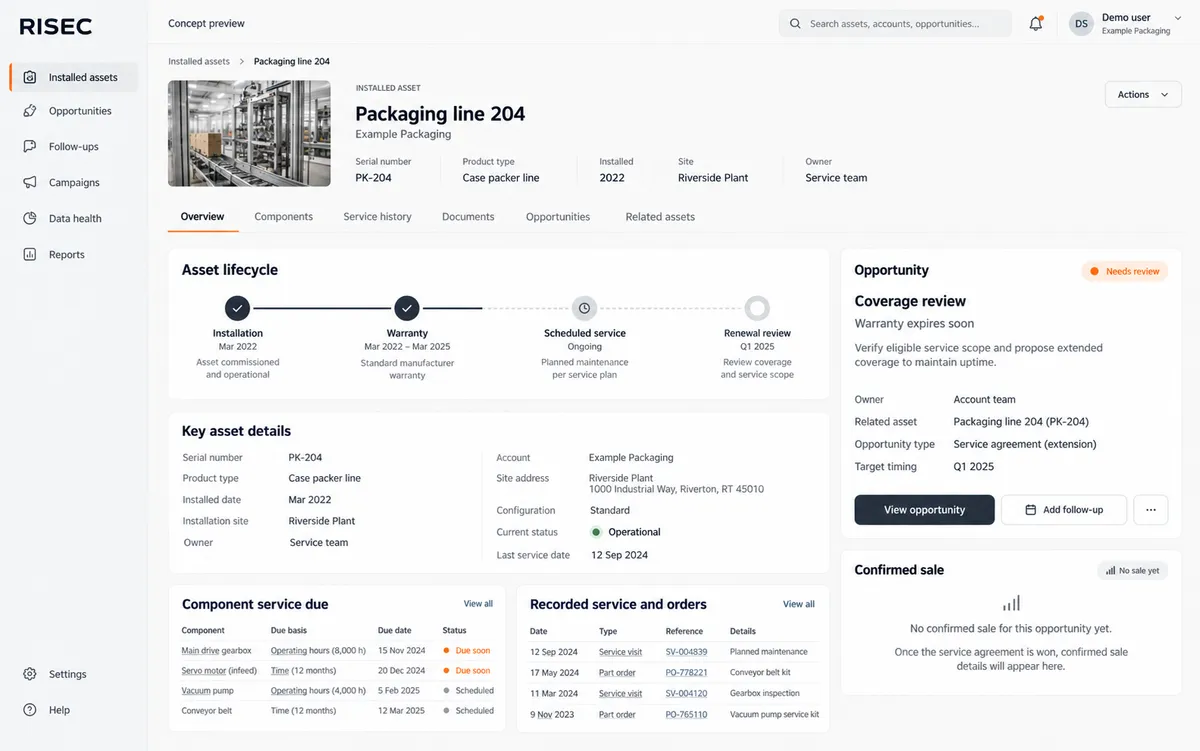
Keep RFQs from getting buried, make quoting decisions traceable, follow up on service renewals and identify relevant spares and aftermarket work. Explore RFQ-to-Quote Workflows and Aftersales Revenue Management.
Increase Manufacturing Efficiency & Improve Customer Support
Reduce administrative overhead, eliminate disconnected workflows, and improve customer services
RISEC Manufacturing ERP
ERP for Manufacturers & Distributors
Manage sales orders, material planning, supplier purchasing, manufacturing work orders, warehouse inventory, deliveries and invoicing through integrated operational and accounting records.
Handle website chat, email and social media inboxes in one place.
Ownership & routing
Assign requests to the right team and keep responsibility visible.
Contact & conversation history
Keep customer profiles, previous interactions and request activity together.
Team collaboration
Use private notes, colleague mentions, saved replies and scoped automations.
Help center
Organize self-service articles and maintain the customer knowledge base.
Reports & satisfaction
Review conversation workload, team activity and recorded customer satisfaction.
Channels, automations, integrations and optional AI assistance depend on the selected configuration and agreed deployment scope.
Industrial equipment and process improvements
Reduce the handling, utility and material costs around production.
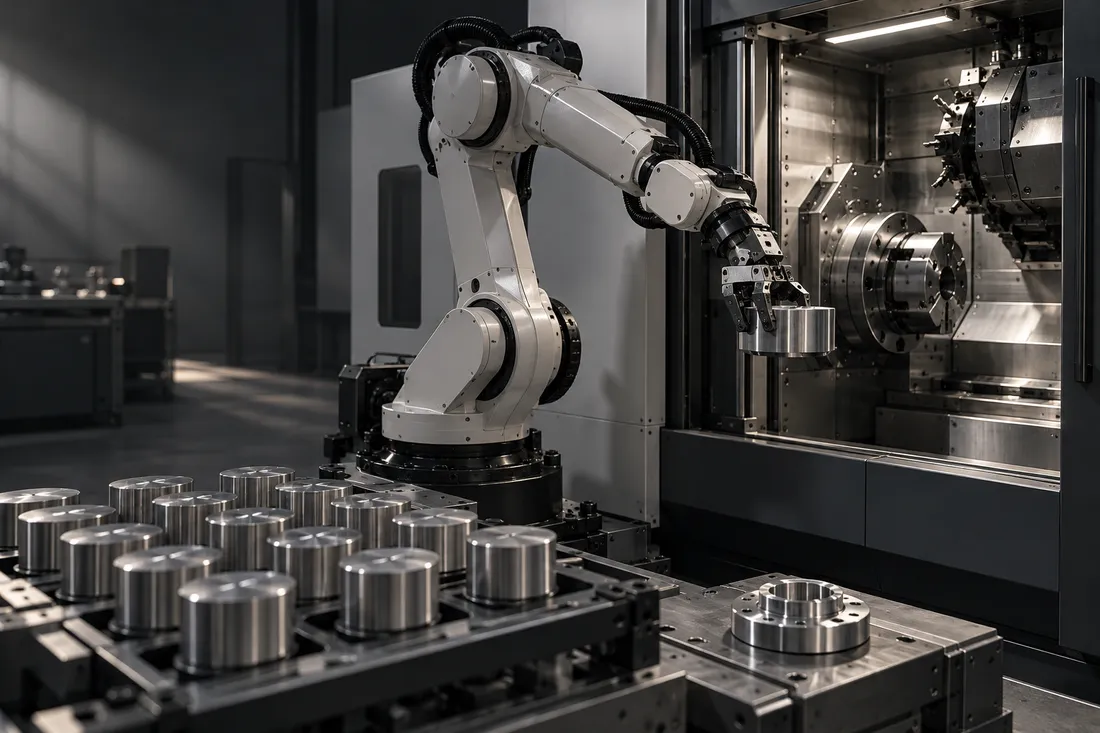
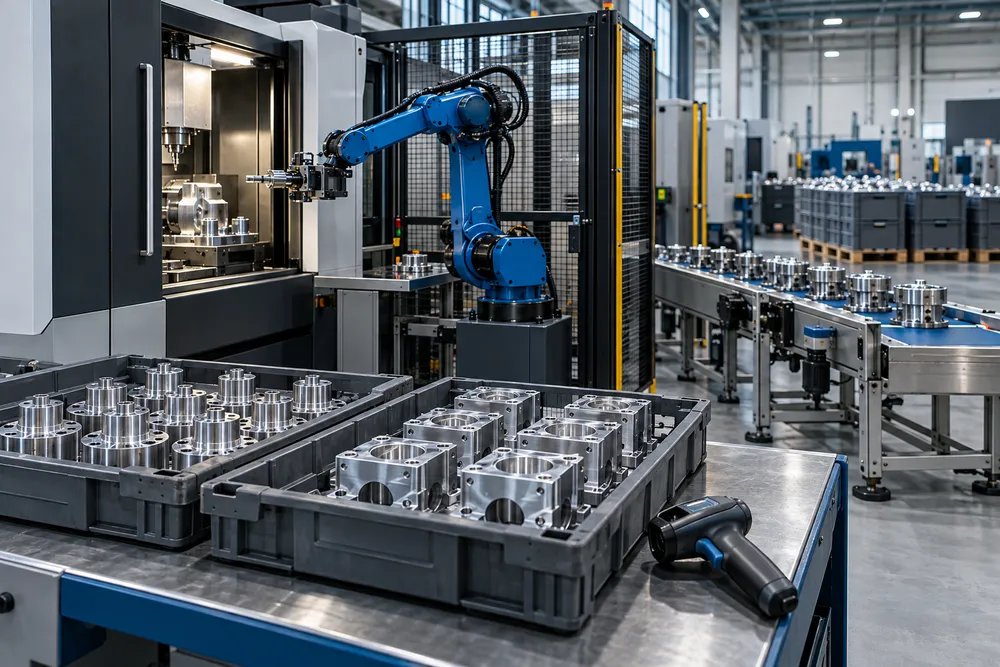
Evaluate robotic machine tending, automated handling and palletizing, welding and finishing equipment, heat recovery, and fluid reclamation against production throughput, labor hours, energy consumption and waste-handling costs.
Increase productive machine hours and finished output.
Load, unload, pack and stack without making every machine cycle depend on manual handling.
Applications and operating requirements
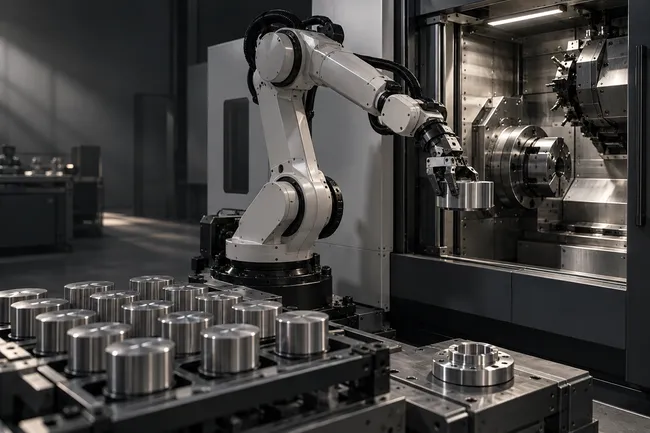
Automate repetitive machine loading, forming, welding, sanding, packing and palletizing where the product mix and production volume make a credible business case. We examine cycle time, changeovers, quality and real demand before recommending capital equipment.
Reduce energy, fluid and waste-handling expenditure.
Return useful heat to production and match utility demand to the process.
Applications and operating requirements
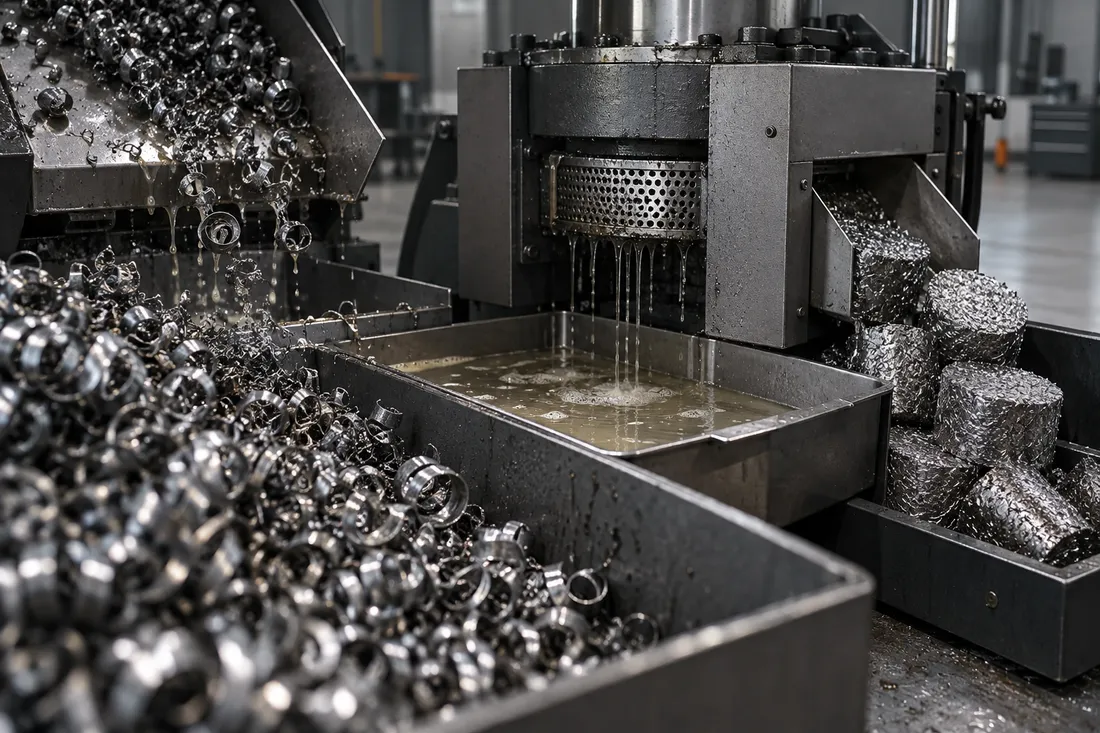
Find out whether your process is losing money through unrecovered steam, spent machining fluid, metal chips, industrial vacuum inefficiencies or costly wastewater handling. The right project starts with actual operating data, not a standard percentage-savings promise.
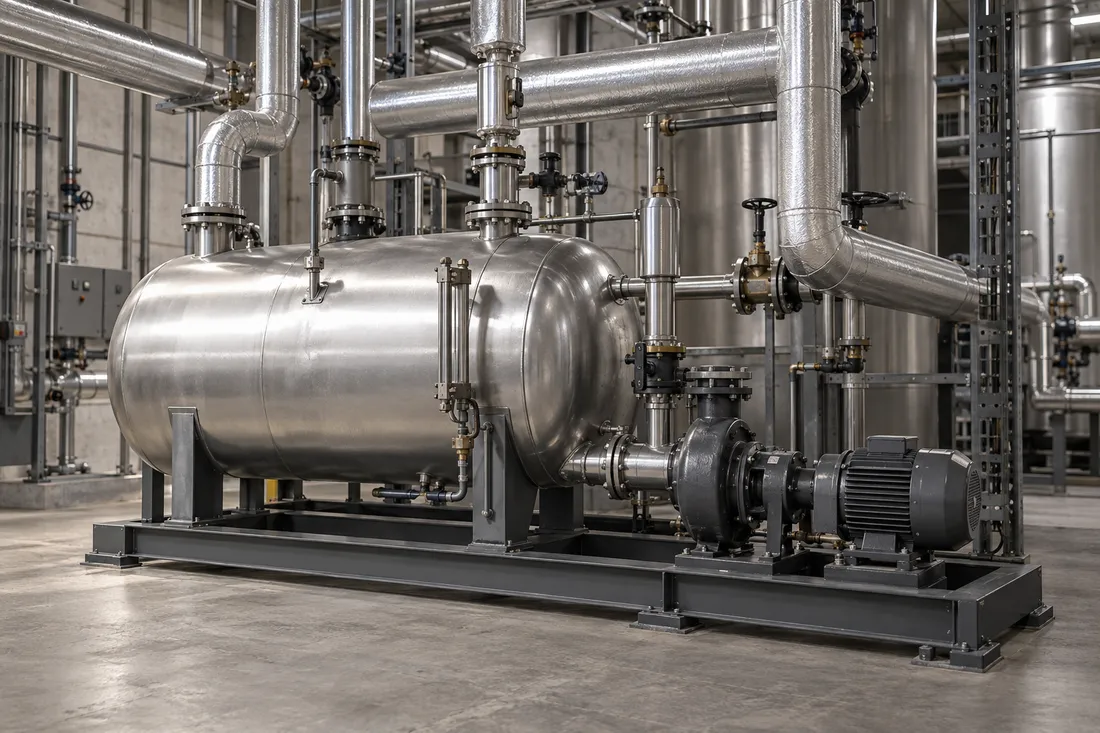
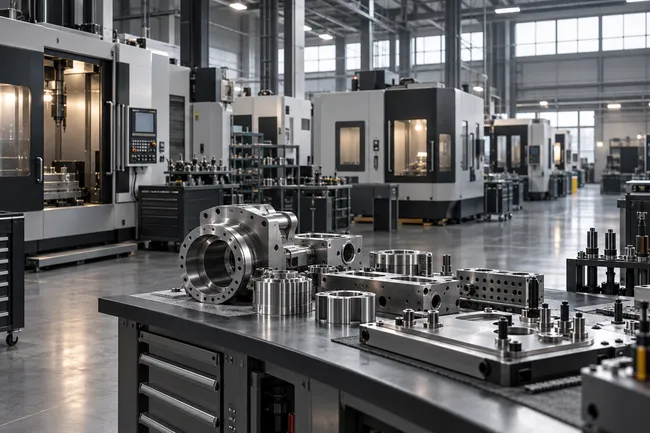
Keep machines working between handling steps.Concept illustrationRecover useful heat and control process demand.Concept illustrationReturn qualified fluid and material to use.Concept illustrationControl the repeated operation and accepted output.Concept illustration
Find solutions for your industry's production, inventory, service and process bottlenecks.
Industry imagery is conceptual, not RISEC installation photography.
Equipment manufacturers: parts, quotes and service
Industrial equipment manufacturers need component control, accurate quoting, production visibility and revenue from the installed base.
Metalworking: fluid, scrap and machine hours
Metalworking and fabrication shops need to recover machining fluid and scrap value, increase productive hours and reduce repetitive handling.
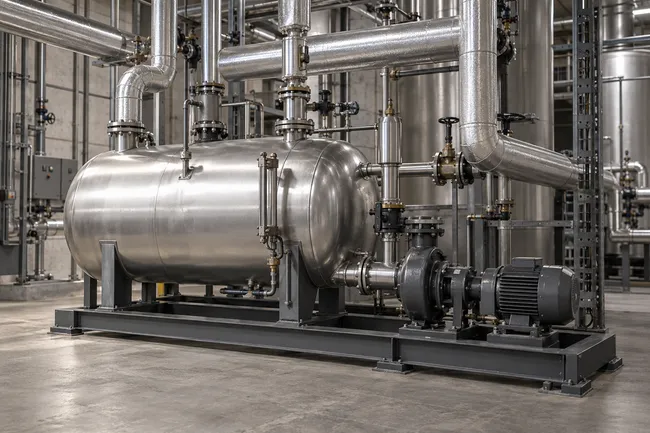
Process plants: heat, wastewater and vacuum
Process manufacturers need credible economics for steam recovery, evaporation, wastewater treatment and vacuum systems.
Laboratories: samples, tests and reports
Laboratories and quality teams need controlled sample handling, testing workflows, reviews and reliable report records.
See documented industrial projects and the results they achieved.
Attributed external case
NIST Manufacturing Extension Partnership
Top Labels and a more reliable inventory record
Explore the inventory challenges Top Labels addressed, the implementation approach and the outcomes reported in NIST's case study.
Read the case studyPublished third-party example. Not a RISEC delivery claim.
Attributed external case
Universal Robots
Toolcraft automates a difficult CNC tending task
Read Universal Robots’ Toolcraft case on multi-operation CNC tending, with published production cost and throughput results for the reported operation.
Read the case studyPublished third-party example. Not a RISEC delivery claim.
Attributed external case
PRAB
Anthony Screw Products rethinks wet chip handling
Read PRAB’s Anthony Screw Products installation on chip processing, cutting-oil recovery, scrap handling, floor space and maintenance improvements.
Read the case studyPublished third-party example. Not a RISEC delivery claim.
Publisher attribution and limits of external case results
We publish industry case studies and technical research because the economics behind an industrial decision deserve scrutiny. Each case identifies its original publisher and the process to which the result applies. A published result from another company's installation is not a promise of what your plant will achieve.
See how RISEC handles your actual workflow before you commit.
Use a representative job, order, RFQ, or service case to evaluate the relevant RISEC solution. Review how it handles your requirements, identify any integration or process gaps, and receive a defined implementation proposal.
Tell us what's happening. It might be a production bottleneck, an avoidable expense, fragmented records or missed aftersales opportunities. A short call is enough to establish whether it's worth a closer look.
Review the real process. For software, we look at your workflows, source data and users. For equipment, we look at throughput, materials, energy, operating hours and technical constraints.
Make an informed decision. The next step may be a working software demonstration, a small pilot, an engineering review or a formal partner quotation. You should know what is included before moving forward.
Compare a practical approach. We outline the technology, implementation work, likely cost drivers and what must be measured. If hardware is appropriate, RISEC privately identifies and evaluates implementation providers.
Stop losing time, money, and sales to inefficient operations.
Inventory shortages, production delays, slow quotations, disconnected systems, and missed service opportunities all affect profitability. RISEC provides industrial software to streamline purchasing, production, quoting, customer service, and business operations, alongside automation and equipment solutions to improve shop-floor productivity and reduce operating costs.