Reduce industrial wastewater hauling, treatment and discharge costs.
Target the contaminants and waste streams driving your bill with source segregation, pretreatment, solids separation and appropriately sized treatment equipment.
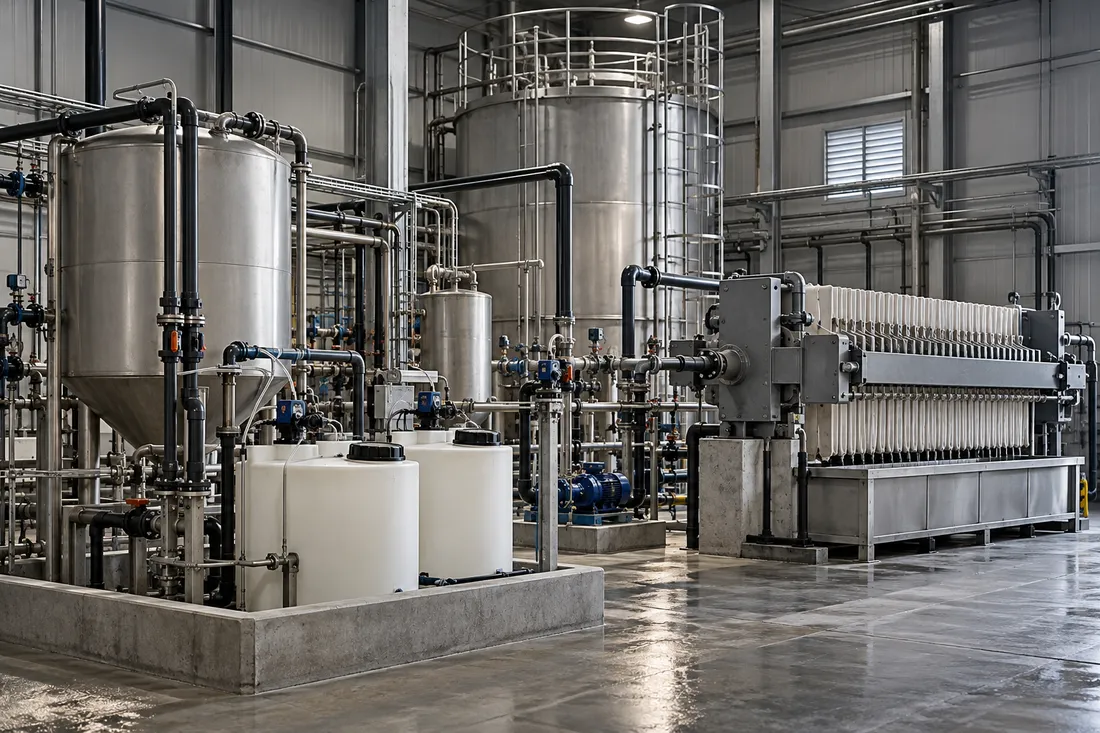
The wastewater bill grows at every stage of handling.
A mixed waste stream can make you treat more volume, dose more chemicals and haul more sludge than the process needs. Discharge surcharges and treatment interruptions add costs beyond the price per gallon.
Too much volume to treat or haul
Mixing streams increases the amount routed through costly treatment or disposal.
Chemicals and sludge add recurring expense
Treatment generates residuals that still need dewatering, handling and collection.
Unstable treatment disrupts production
Variable wastewater loads put pressure on storage, equipment and discharge management.
Treat the source of the cost, then manage the residual stream.
RISEC coordinates a treatment or pretreatment upgrade around your wastewater chemistry, flow and discharge route. The scope brings source-stream management, equipment, controls and residual handling together.
Separate relevant waste streams
Avoid mixing streams that are better managed independently.
Target the contaminants
Select pretreatment and separation against the measured pollutant load.
Reduce sludge-handling burden
Include solids separation, dewatering and residual disposition.
Stabilize treatment operation
Coordinate dosing, monitoring, storage and equipment around changing flow.
Where you recover value.
Lower hauling and residual costs
Reduce the volume and form of material sent through the expensive disposal route.
Control chemicals and energy
Match treatment intensity and equipment duty to the stream.
Improve operating continuity
Manage load variation and discharge requirements before they interrupt the plant.
$24,000/year
An example $2,000 monthly reduction in combined hauling, sludge and discharge charges equals $24,000 per year, before changes in treatment operating costs.
How the process works.
Source streams
Identify and separate the process wastewater sources.
Sampling
Sample flow and contaminant load.
Pretreatment
Apply the selected pretreatment stage.
Solids separation
Separate solids and manage residuals.
Monitoring
Monitor treated water against discharge requirements.
Discharge and residuals
Route treated water and residuals to their approved destinations.
Source reduction in metal-finishing operations
The US Environmental Protection Agency documents pollution-prevention opportunities in metal finishing that address water use, sludge generation and the waste stream before disposal. Read the EPA overview.
Equipment scope and common questions.
Design covers flow, pH, oil, solids, dissolved contaminants, variability, sampling, sludge, utilities and space. A qualified provider establishes treatment performance, permit requirements and commissioning responsibilities for the discharge route.
Can you size equipment from the flow alone?
Flow and a representative wastewater analysis are both needed. Oily machining water and metal-finishing discharge need different treatment decisions.
Who handles discharge requirements?
The project defines engineering, testing, permitting, operating and residual-handling responsibilities under the applicable local requirements.
What determines installation cost?
Waste streams, treatment objectives, materials, equipment, layout and commissioning scope determine the quotation.
Reduce the cost of treating, moving and discharging your wastewater.
Tell us about the operation you want to improve. We will help define the equipment, integration and next steps for that application.