Extend coolant life and reduce repeated fluid purchases and disposal.
Remove tramp oil and fine solids, monitor fluid condition and return serviceable coolant to machining instead of discarding it prematurely.
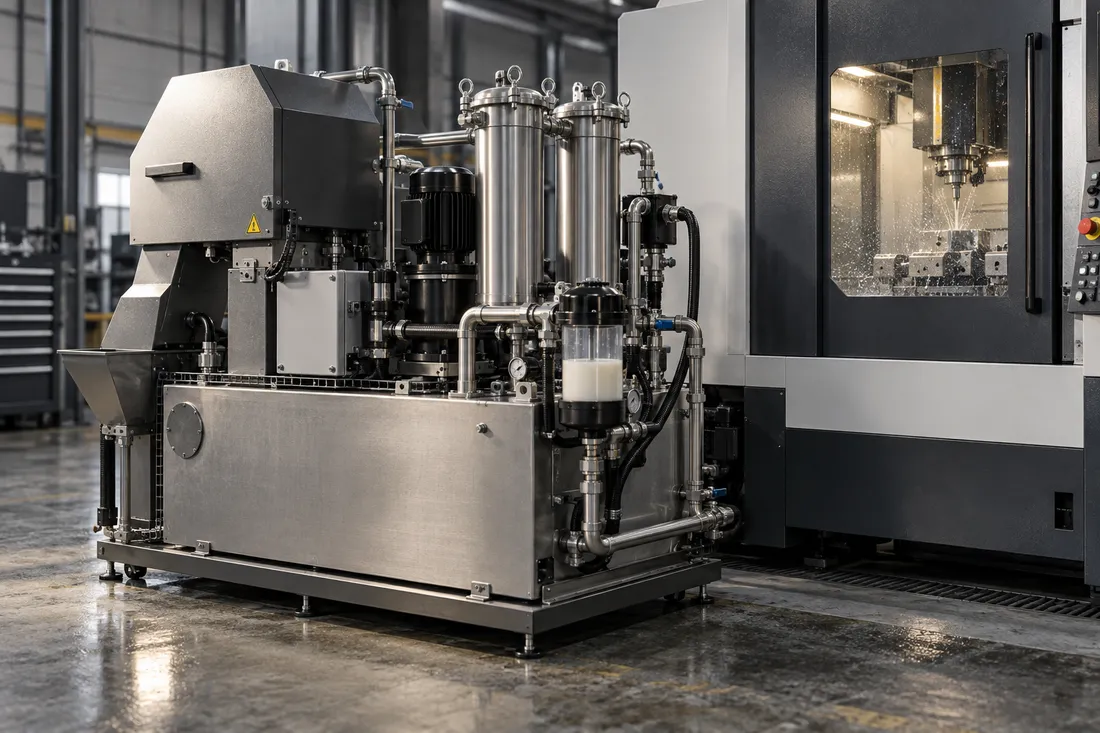
A coolant dump costs more than the replacement concentrate.
Discarding a contaminated sump repeats the bill for concentrate, water, machine cleanout, labor and waste handling. It can also interrupt machining while the system is emptied, cleaned and refilled.
Repeated fluid purchases
Contamination can trigger disposal while part of the fluid remains serviceable.
Machine cleanout and interruption
Each change consumes maintenance time and takes the machine away from production.
Waste-fluid handling
Hauling, treatment and disposal charges recur with every discarded volume.
Remove contamination and put serviceable coolant back into use.
RISEC scopes portable or centralized separation and filtration with an operating routine for fluid checks and return to service. This treats the fluid in circulation and complements recovery from chips leaving the machines.
Separate tramp oil
Remove suitable free-oil contamination from the coolant stream.
Filter fines and solids
Match filtration stages to the particles and fluid conditions in machining.
Monitor fluid condition
Check concentration, pH, biological condition and other process requirements.
Return serviceable fluid
Route accepted coolant back into use and manage the smaller residual stream.
Where you recover value.
Lower new-fluid demand
Keep usable fluid working longer before a full replacement is needed.
Reduce disposal volume
Separate contamination instead of sending the entire serviceable volume away.
Reduce repeated cleanout work
Better contamination control reduces the burden of avoidable sump changes.
12,000 gal/year
Avoiding one 1,000-gallon dump each month keeps 12,000 gallons out of the annual replacement and disposal cycle. The concentrate ratio determines new concentrate demand.
How the process works.
Used coolant
Collect contaminated coolant from the machining system.
Oil separation
Separate tramp oil from the fluid.
Solids filtration
Filter solids and fine particles.
Fluid checks
Check fluid condition against process requirements.
Coolant reuse
Return serviceable coolant to circulation.
Residual handling
Remove and dispose of the separated residuals.
Fluid recycling used in machining operations
PRAB documents metalworking-fluid recovery and recycling installations, including an aerospace-components application reporting reduced new-coolant purchases. Explore the manufacturer’s installations.
Equipment scope and common questions.
System selection covers fluid type, concentration, sump volumes, contamination, machine connections, filtration media, operating procedures and residual handling. Chemically exhausted fluid needs replacement rather than filtration alone.
Is this equipment or a fluid-management service?
The scope can combine separation and filtration hardware with the site’s operating, monitoring and maintenance procedure.
Does recycling replace chip wringing?
They solve different losses. Recycling treats fluid in circulation; wringing recovers fluid carried away on chips.
Can every fluid be reused?
Return to service depends on fluid condition and process requirements. Degraded fluid is replaced or disposed of through the appropriate route.
Stop replacing coolant that can remain in productive use.
Tell us about the operation you want to improve. We will help define the equipment, integration and next steps for that application.