Laboratory Core
$999Monthly from
- Suitable starting scope
1 laboratory site
Up to 5 active users
2,500 samples per year
2 verified instrument connections
Connect sample identification, testing procedures, analyst results, quality controls, approvals, and certificates of analysis to reduce manual administration and reporting errors.
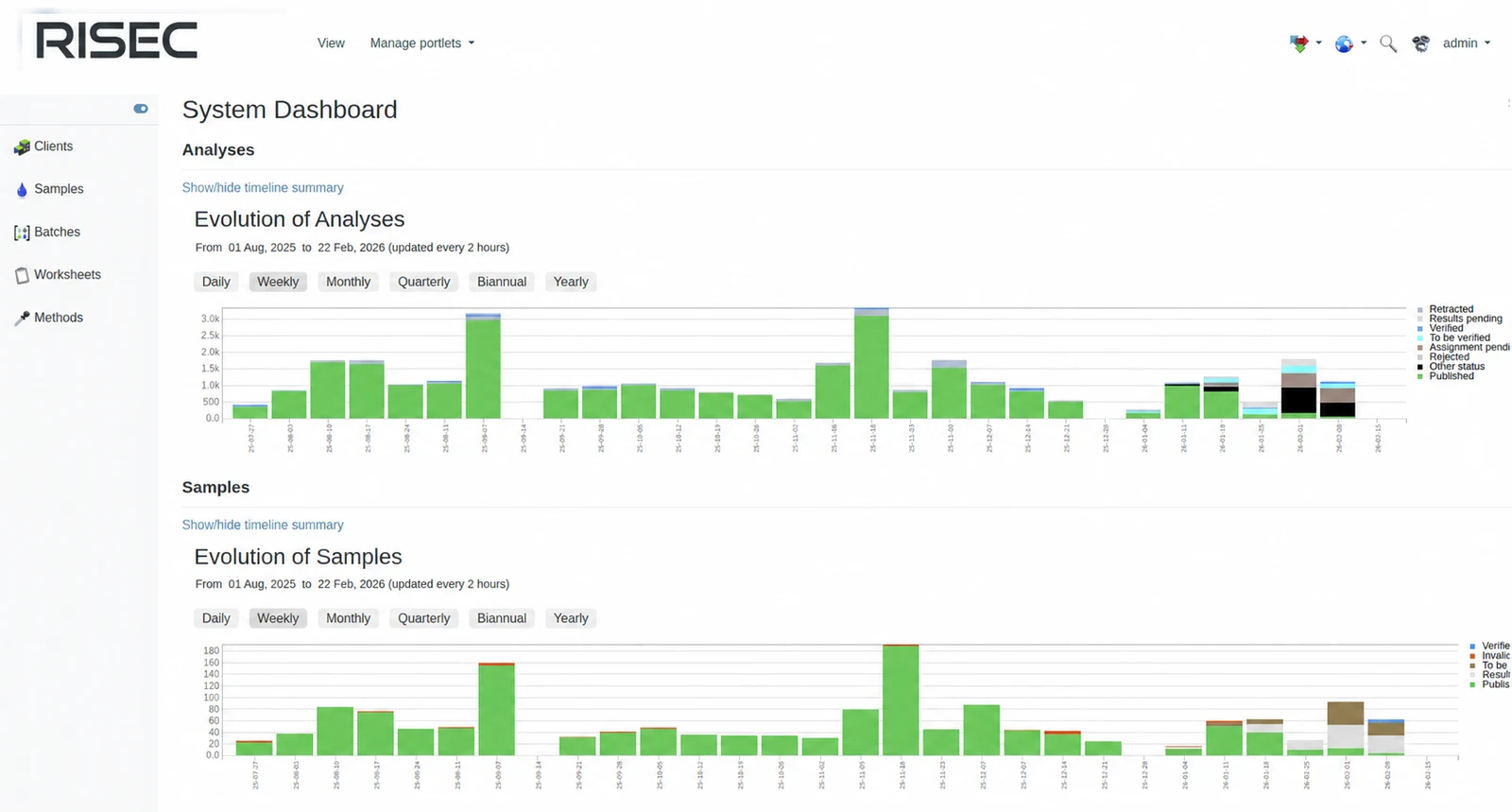
A customer requests a test. Someone receives the sample, another person assigns the method, a technician enters results and a reviewer signs off the report. If those steps sit in different spreadsheets, it becomes difficult to see exactly what was done, by whom and which information was approved.
Laboratory Management System is designed around the full sample-to-result workflow. The managed deployment can be configured to support sample registration, laboratory assignments, analytical records, quality-control review and released reports.
Representative tests and methods. Review and release responsibilities. Required report and instrument formats. Explore the steps to see what must be recorded or verified.
Give the sample a traceable identity and receipt context.
Sample lifecycle illustration. Software does not itself confer accreditation.
At receipt, the sample receives an identity and the related customer or project information.
In the laboratory, the required tests are assigned and the analytical data is entered into the relevant worksheets and result records.
Before release, the information can be reviewed against the laboratory's procedures, corrected or held where necessary, and assembled into the approved report.
That chain is the system's main value. It is not a promise that installing software makes a laboratory compliant or accredited.
When a customer asks for a result, the laboratory should be able to show which sample was tested, which method was used, who entered the data and which review released the report. A guided walkthrough should follow that chain with real sample and worksheet screens, identifying any additional instrument or validation work needed for your procedures.
Record sample identity, customer, collection or sampling-point context, requested analyses and handling status. Where useful, supported bulk import tools can process structured sample request spreadsheets. Samples collected at the same location or point can retain the relationships needed for later investigation.
Laboratory methods, analysis services, worksheet assignments and authorized result entry can follow the configured testing process. Staff should see which analyses remain unassigned, in progress, awaiting review or ready to report, rather than asking another department to chase the status.
Supported instrument modules and adapters may reduce re-entry of readings and help connect results to the equipment used. Some interfaces may be available as modules, while others require extra development and verification. Automatic instrument imports are offered only after testing the exact model, protocol and output format.
Reference samples, control limits, review steps and correction handling should be configured against documented laboratory procedures. The system has relevant quality-control and result-management functions, but electronic signature, regulated validation and accreditation suitability remain customer-specific assessments.
Produce appropriately configured Certificates of Analysis and customer reports after required review. Standardized templates can reduce manual formatting; specialized report designs and batch-based invoicing may be included where the tested modules and scope support them.
Where relevant to environmental, stability or process testing, supported time-series components can tabulate and graph repeated measurements. Sample storage records, reference samples and management reporting add useful control when applicable to the laboratory's workflow.
Compare present sample turnaround, transcription minutes, report compilation effort, amendment frequency and actual outstanding-result queues. The potential value is reduced clerical work and clearer status, not an unsupported promise that tests will finish faster than the laboratory method allows.
When sample details, worksheets, instrument readings and report templates live in different places, the laboratory loses time reconciling the evidence behind a result. A controlled laboratory system makes the route from accessioning to reviewed output easier to follow and supervise.
Choose a high-volume test family where a sample regularly waits for transcription, review or certificate preparation. Measure accessioning and administrative effort per sample, the number of corrections and median time from sample receipt to an authorized report. Compare the same measures after a validated rollout. Avoid promising accreditation or a blanket time-saving percentage: laboratory methods, sign-off duties and data quality still determine the actual result.
Scope and assurance: Quality controls and traceable records can support the processes expected of an accredited laboratory; they do not by themselves grant ISO/IEC 17025 accreditation, validate an analytical method or establish instrument compatibility. Optional storage, import, interface, time-series and invoicing components depend on the deployed package.
Associate orders or requested tests with the appropriate customer and laboratory catalogue where configured.
Give incoming samples consistent identities, receipt context, dates and required analytical work.
Distinguish where a sample was collected and the location hierarchy relevant to the test.
Bring recurring sets of samples into the application from suitable spreadsheet data rather than retyping each record.
Maintain supported storage information for retained material and appropriate handling records.
Link a requested test with the configured method, sample and result requirements.
Group analytical work into the working lists that laboratory staff can process, including appropriately configured batches or instruments.
Follow progress from submitted or received sample through analysis, review and approved reporting.
Connect documented instruments through deployed and validated drivers where available; do not assume every laboratory device is compatible.
Capture the required units, method or context beside the measured result.
Track supported reference samples and control data so reviewers have a basis for assessing analytical validity.
Review exceptions and authorize results through the configured laboratory process.
Preserve the traceable activity necessary to investigate a result or correction.
Use supported analytical processing and repeat records where the validated methods require them.
Table or graph values that change over a test interval when the installed time-series component is available.
Keep preliminary or unreviewed values separate from approved customer-facing results.
Generate supported PDF certificates using configured templates and the results authorized for reporting.
Agree formatting, identification and release information needed for a particular customer or laboratory workflow.
Configure receipt acknowledgement email when the applicable module and notification setup are deployed.
Evaluate laboratory workload and outcomes through the reports actually present in the selected package.
Use the relevant optional invoicing workflow where the tested installation and accounting handoff support it.
Assign who may access samples, record results, review, authorize and issue reports.
Scope the deployment around the laboratory's real analytical methods rather than assuming all clients have the same test catalogue.
We recommend beginning with a representative sample family and its complete analytical workflow. That reveals which methods, data fields, calculations, approval steps and report templates actually need to be configured. Migrating every historical result before testing one real workflow is rarely the best first technical milestone.
1 laboratory site
Up to 5 active users
2,500 samples per year
2 verified instrument connections
1 site
Up to 15 active users
20,000 samples per year
5 verified instrument connections
Up to 2 sites
30 active users
75,000 samples per year
10 verified instrument connections
Custom scope if any Operations limit is exceeded:
2 sites
30 users
75,000 samples per year
10 verified instrument connections
Implementation fees dependent on your organisations requirements. Method configuration, instrument interfaces, historical data, hosting and support are confirmed in the written proposal. Validated compliance requirements need an agreed statement of work; software configuration alone does not grant accreditation or validate analytical methods. Package limits describe the managed deployment scope, not a restriction on laboratory workflow capabilities.
Track the minutes spent transcribing, checking and compiling reports, the actual correction rate and the number of samples handled. A calculator can estimate addressable clerical time, but it should not assert that a particular laboratory will eliminate failed tests or meet ISO/IEC 17025 simply through software adoption.
No. Accreditation involves validated methods, competency, quality systems, records and independent assessment. Can it integrate every instrument? Instrument compatibility is assessed individually. Can customers receive COAs? Yes where a tested reporting workflow has been configured and authorized. What about historical sample data? We scope mapping, import and retention based on your record quality and obligations.
We'll follow it backward to the original sample and tests, then discuss the configuration, migration and review controls that would make the process more reliable.