Stop paying to replace heat and water your steam system can recover.
Return hot condensate, recover usable flash steam and correct distribution losses to reduce boiler fuel, make-up water and treatment demand.
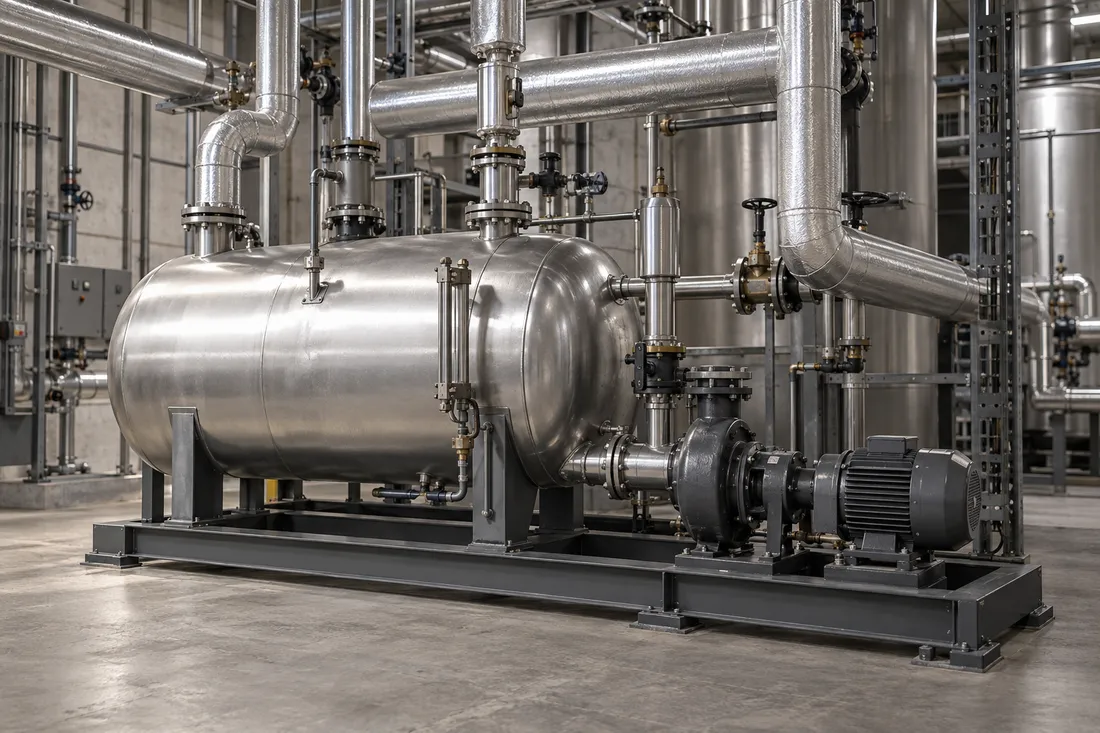
Hot condensate going to drain takes paid-for heat, water and chemicals with it.
Your boiler heats and treats replacement water every time reusable condensate leaves the system. Leaking traps and uncontrolled venting add to that recurring utility load, shift after shift.
Purchased heat lost
Hot return water is replaced with colder make-up water, increasing the heating duty.
Water and chemicals bought again
Discharged condensate must be replaced and treated before the boiler can use it.
Steam losses left running
Trap leakage and poorly controlled discharge consume utilities throughout operating hours.
Return useful heat and water to the boiler system.
RISEC scopes condensate collection, return pumping, trap improvements and heat recovery with suitable engineering and implementation providers. The result is a connected recovery project around your steam users, piping and boiler feed system.
Collect and return condensate
Route suitable hot returns through correctly sized receivers, pumps and piping.
Correct trap and distribution losses
Address leakage, improper discharge and recurring maintenance issues.
Reuse flash-steam heat
Connect available heat to a suitable lower-pressure user or heat exchanger.
Control and monitor the return
Manage temperature, contamination and operation through the appropriate instrumentation.
Where you recover value.
Lower fuel demand
Returned hot water reduces the heat required to prepare boiler feedwater.
Lower water and treatment demand
Each gallon returned replaces a gallon of make-up water before allowances for system losses.
Reduce recurring utility waste
Corrected trap and return problems stop the same losses repeating across shifts.
250,000 gal/year
Returning 1,000 gallons per operating day over 250 days replaces 250,000 gallons of make-up water, before other system losses. The returned water also brings useful heat.
How the process works.
Steam supply
Supply steam to the process heat user.
Process heat
Transfer heat into production.
Hot condensate
Collect hot condensate at the outlet.
Receiver
Separate and collect the return stream.
Return pump
Pump suitable condensate back through the return system.
Boiler feed
Feed recovered water and heat back to the boiler.
Why condensate return reduces utility demand
The US Department of Energy identifies condensate return as a way to reduce water consumption, treatment chemicals and the energy needed to heat boiler feedwater. Read DOE guidance.
Equipment scope and common questions.
The scope covers steam pressure, return temperature and flow, trap stations, flash vessels, pumping, contamination controls and boiler-water requirements. Tie-ins and commissioning are planned around plant operations.
Can contaminated condensate be returned?
Contaminated streams need separation, treatment or a different recovery route. Water chemistry determines the return destination.
Does this require a shutdown?
Some tie-ins do. The project identifies isolation points and schedules piping, trap and control work around production.
What is included in pricing?
Engineering, equipment, installation and commissioning responsibilities are defined for the selected return and recovery scope.
Reduce the heat, water and treatment cost leaving your steam system.
Tell us about the operation you want to improve. We will help define the equipment, integration and next steps for that application.