Cut unnecessary vacuum-pump running hours and electricity use.
Improve leakage control, pump sequencing and demand response so your vacuum system supplies production without running excess capacity throughout the shift.
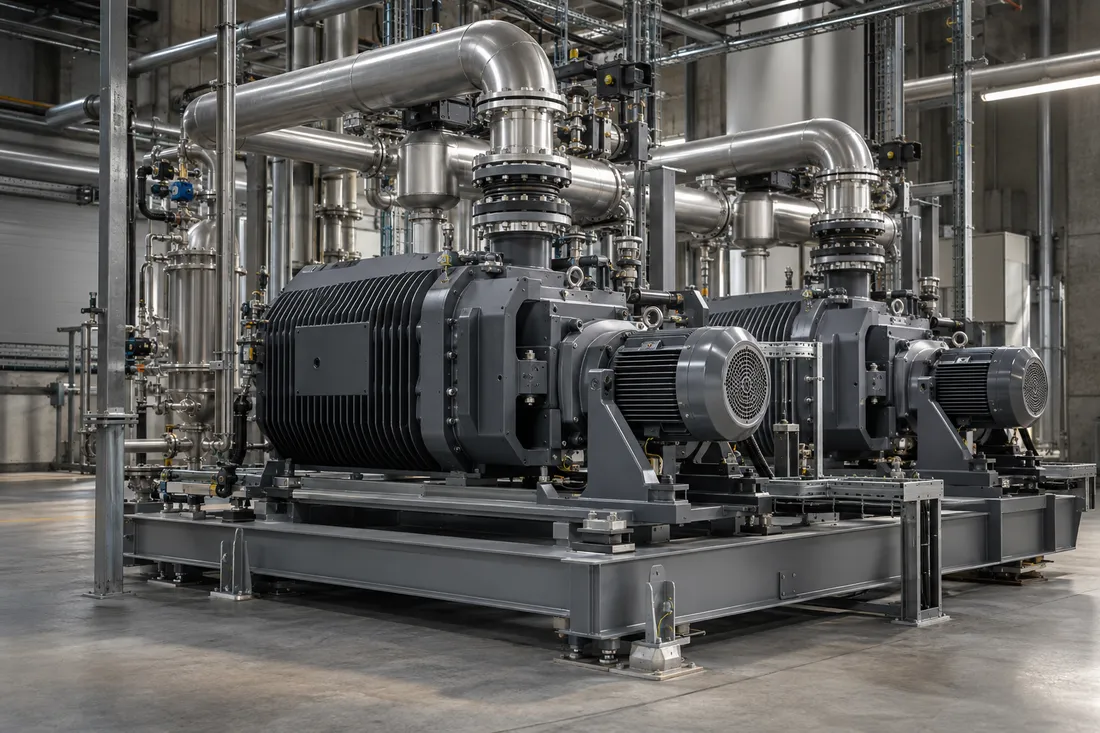
Peak-sized pumps keep costing money when demand falls.
Vacuum demand changes across production, idle periods and changeovers. Pumps that keep running at an unsuitable operating point consume electricity and maintenance time without producing more useful work.
Idle and partial-load power
Pump capacity stays online after the process needs less vacuum duty.
Leakage and distribution losses
The pump works harder to maintain the required pressure at the process.
Unnecessary wear and service
Extra running hours add maintenance demand and reduce service intervals.
Make pump operation follow actual process demand.
RISEC reviews the vacuum duty, distribution and control strategy, then scopes repairs, sequencing, controls or pump modernization with suitable providers. The target is lower operating cost at the vacuum performance production needs.
Repair avoidable leakage
Address leaks, isolation issues and pressure drops in the system.
Sequence multiple pumps
Bring capacity online as demand rises and remove excess capacity when it falls.
Modernize demand controls
Coordinate sensors, setpoints and control logic around the production cycle.
Select the right pump technology
Match replacement options to pressure, gas load, contamination and reliability requirements.
Where you recover value.
Lower electricity consumption
Reduce unnecessary kW across the hours spent in each operating state.
Reduce excess running time
Avoid servicing pump hours that do not contribute useful process duty.
Protect process performance
Keep pressure response and capacity aligned with the manufacturing operation.
60,000 kWh/year
Removing 10 kW of unnecessary demand over 6,000 operating hours saves 60,000 kWh. At an example $0.12/kWh, that is $7,200 per year in electricity.
How the process works.
Process demand
Identify the vacuum duty of each process user.
Duty profile
Separate peak, partial-load and idle operation.
Power logging
Record power and pressure during those states.
System upgrade
Apply leakage, sequencing or pump-control improvements.
Process vacuum
Deliver the required vacuum level to production.
Monitoring
Track energy use and maintenance after the change.
Demand-based vacuum control in practice
AHDB technical guidance describes controlling vacuum-pump operation in response to actual demand in dairy systems. It illustrates the control principle behind reducing unnecessary running power. Read the technical guidance.
Equipment scope and common questions.
The review covers operating pressure, gas load, power, duty hours, pump condition, control method, isolation, contamination and redundancy. Food, packaging and chemical-process duties have different hygiene and reliability requirements.
Is a new pump required?
Not always. Leakage repairs, sequencing and controls can address the loss before replacement is considered.
Will changing controls affect production?
The control strategy is set around the process pressure, response time and product requirements.
What should we bring to the first discussion?
Pump types, ratings, operating hours, required vacuum range and any available electricity or maintenance records.
Stop running more vacuum capacity than production needs.
Tell us about the operation you want to improve. We will help define the equipment, integration and next steps for that application.